How to Choose the Right Packaging Corrugated for Your Products?
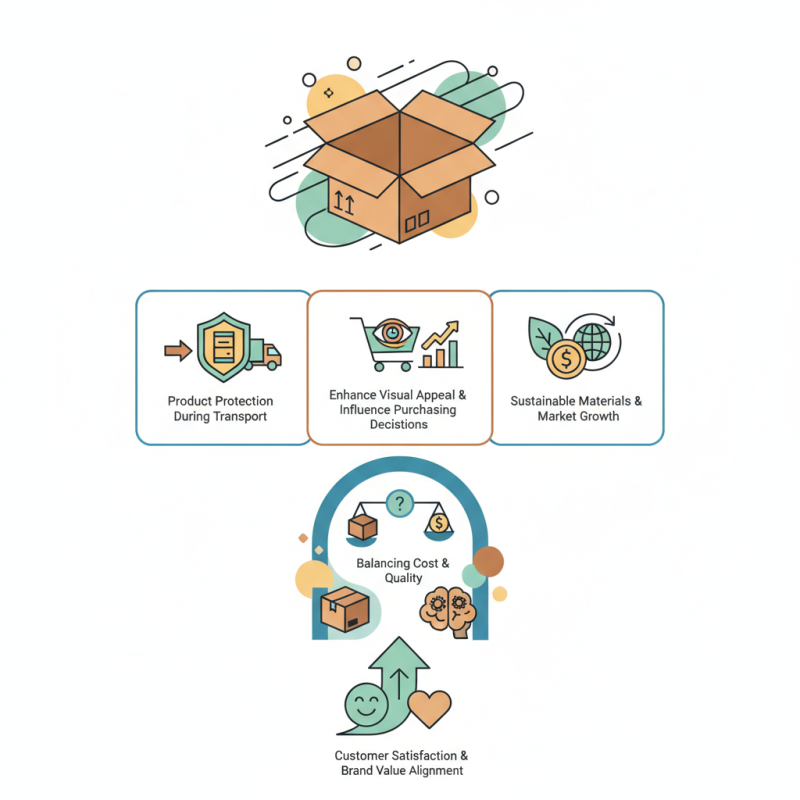
Choosing the right Packaging Corrugated can greatly impact your product's success. Studies show that 72% of consumers judge a product by its packaging. The right choice ensures product protection during transport. It can also enhance visual appeal and influence purchasing decisions.
In 2021, the global corrugated packaging market was valued at $256 billion. This figure is expected to grow as businesses recognize the importance of sustainable materials. However, many companies still miss opportunities to align their packaging choice with brand values, which can confuse customers.
Investing time in understanding Packaging Corrugated options is essential. Not all materials suit every product. Some businesses struggle with balancing cost and quality. Reflecting on these choices can lead to better alignment with customer expectations and enhance overall satisfaction.
Understanding the Basics of Corrugated Packaging Materials
Corrugated packaging is essential for many products. It offers durability and protection during transport. Understanding its structure helps in making better choices. Corrugated materials consist of a fluted middle layer sandwiched between two flat liners. This design adds strength while keeping weight low.
When selecting corrugated packaging, consider thickness. Thicker materials are sturdier and offer more protection. However, they may add weight and cost. Thin materials may save money but can compromise safety. Weighing performance against budget is crucial. Not every product fits perfectly into a standard box. Custom solutions can sometimes be necessary.
Sustainability is also a key factor in packaging decisions. Many materials are recyclable or biodegradable. But the sourcing process can be unclear. Are you truly choosing the best option for the environment? It's worth reflecting on your choices. Ensuring the right balance between cost and eco-friendliness can be challenging. Packaging should protect the product but also align with values.
How to Choose the Right Packaging Corrugated for Your Products?
| Dimension |
Description |
Application |
Strength |
| Single Wall |
Lightweight and economical option |
Ideal for shipping non-fragile items |
Basic strength, suitable for lighter goods |
| Double Wall |
More durable with extra layer of fluting |
Good for heavy and fragile items |
Moderate to high strength |
| Triple Wall |
Maximum protection with three layers of fluting |
Used for shipping heavy-duty products |
High strength, designed for extreme conditions |
| E-Flute |
Thin, lightweight fluting |
Perfect for retail packaging and display boxes |
Lower strength but aesthetically pleasing |
| B-Flute |
Standard all-purpose fluting |
Suitable for general shipping and storage |
Good balance of strength and quality |
Identifying Your Product's Specific Packaging Requirements
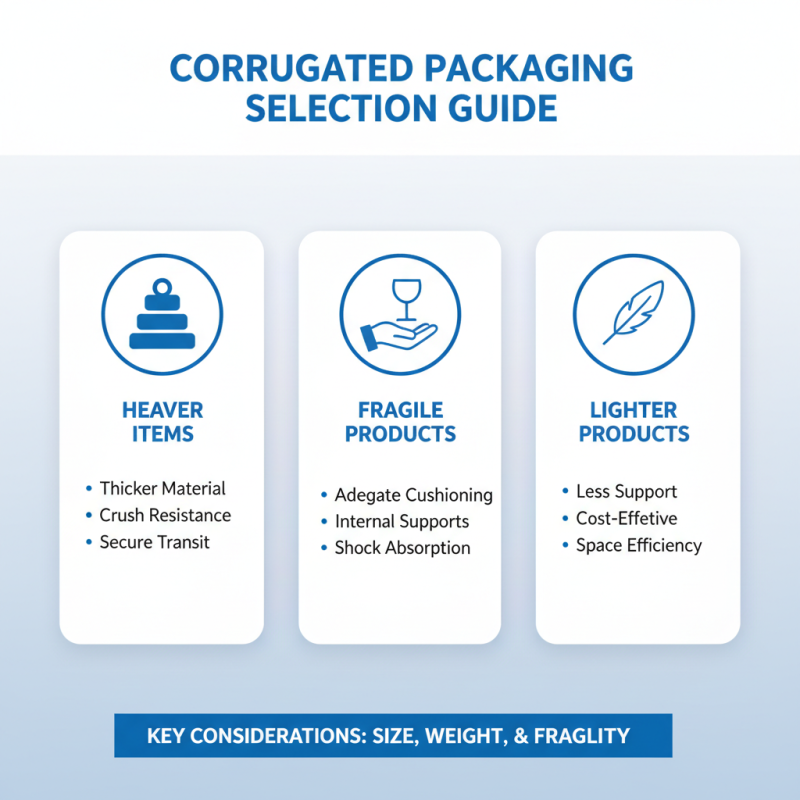
When selecting corrugated packaging for your products, understanding specific packaging requirements is crucial. Different products have unique needs based on size, weight, and fragility. For instance, heavier items may require thicker material to avoid damage during transit. Lighter products may need less support but still, require adequate cushioning.
Tips: Consider the weight of your product. Heavy items need stronger cardboard. This choice affects overall safety during shipping. Additionally, think about product dimensions. A snug fit reduces movement inside the box. Unnecessary space can lead to damage.
Visualize your product's journey. Is it shipped across the country or globally? The longer the journey, the more protection your packaging needs. Fragile items often demand inserts or additional padding. Always reflect on how the packaging can affect customer satisfaction.
Tips: Don’t forget about eco-friendliness. Sustainable options may intrigue customers. Check local regulations to avoid conflicts. Packaging can reflect your brand values. Aim for a balance between protection and environmental responsibility. Test different designs. Sometimes, trial and error leads to better outcomes.
Evaluating Different Types of Corrugated Designs
Choosing the right corrugated packaging for your products involves evaluating various designs. Different corrugated structures serve distinct purposes. According to the Association of European Producers of Adhesive Tapes, nearly 70% of all consumer products rely on effective packaging to ensure safety and freshness.
Standard single-wall corrugated designs offer strength and cost-effectiveness. However, they may lack durability in extreme conditions. Double-wall and triple-wall options provide added protection but at a higher cost. An estimated 30% of brands report increased shipping damage with inadequate packaging. Thus, it’s crucial to assess the nature of your products.
The choice of flute type also impacts functionality. A-flute is thick and provides excellent cushioning. B-flute is thinner, designed for boxes that require stacking strength. C-flute balances both features. Companies should weigh these factors against their product's vulnerability and distribution method. Packaging choices can significantly affect customer perceptions and brand reputation.
Corrugated Packaging Types and Their Effectiveness
Considering Environmental Impact and Sustainability in Packaging
Choosing the right corrugated packaging requires careful thought about
environmental impact. Many businesses overlook this aspect while focusing solely on
durability and cost. Sustainable packaging can be cost-effective in the long run if done correctly.
Recycled materials play a key role here. Using 100% recycled corrugated cardboard reduces waste significantly.
However, sourcing can be tricky. Ensure suppliers genuinely prioritize sustainability. Some claim eco-friendliness while still using harmful practices.
This leads to consumer distrust.
Biodegradability is a crucial factor. Corrugated packaging can decompose naturally, but not all types do.
Understand the lifecycle of your packaging. This reflection can guide better choices.
Transparent packaging solutions foster trust with consumers. Customers today care about sustainability.
They seek brands that align with their values.
Analyzing Cost-Effectiveness and Supplier Options for Corrugated Packaging
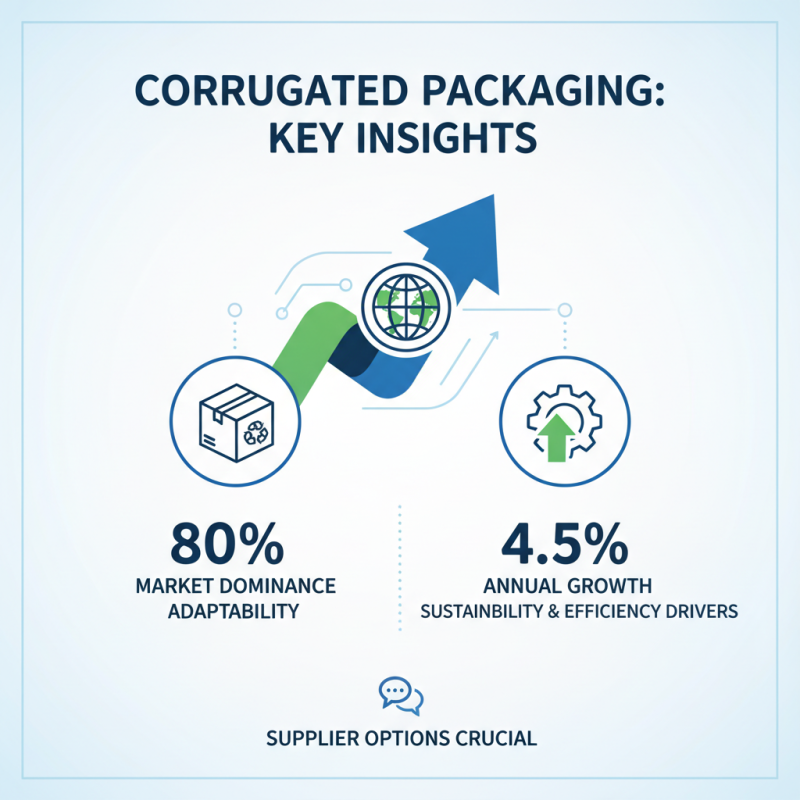
When evaluating the cost-effectiveness of corrugated packaging, understanding supplier options is crucial. Recent industry reports indicate that corrugated boxes dominate 80% of the packaging market due to their adaptability. The global corrugated packaging market is projected to grow at a rate of 4.5% annually. This growth reflects increasing demand for sustainability and efficiency.
Choosing the right supplier can impact your bottom line. An analysis shows that sourcing from local suppliers can reduce transportation costs by up to 30%. However, larger suppliers may offer economies of scale. Weighing these factors is not easy. Some businesses focus solely on price, neglecting the total cost of ownership, which includes quality and reliability.
Sustainability is becoming increasingly vital. A survey revealed that 75% of consumers prefer packaging solutions that are eco-friendly. However, the challenge lies in balancing cost and environmental impact. It can be tempting to go for lower-cost options, yet they may compromise quality. Reflecting on these decisions is key to long-term success.