
Choosing the right Corrugated Roll is a production decision, not merely a purchasing task. The roll influences flute shape, paper contact, compression, energy use, and board consistency. A small error in profile selection can appear as crushed flutes, weak bonding, or uneven caliper across the sheet. Operators often notice these defects beside the machine before quality data explains them.
Market evidence shows why this choice deserves careful attention. Smithers’ The Future of Corrugated Packaging to 2028 estimated the global corrugated packaging market at approximately US$205 billion in 2023, with continued growth expected through 2028. FEFCO industry data also highlights sustained European demand for efficient, recyclable fibre-based packaging. More output does not automatically mean better output. That assumption needs questioning.
A suitable Corrugated Roll should match the flute profile, paper grades, line speed, working width, and heating conditions. Tungsten carbide coatings may support longer service life, while precise grinding helps maintain uniform flute geometry. However, coating alone cannot correct poor alignment or unsuitable pressure settings. Measure actual wear, inspect the roll surface, and compare production records before deciding.
Experienced teams should review crush resistance, warp, bonding quality, and downtime together. The cheapest roll can become expensive when waste rises. The most advanced roll may also be unnecessary for a slower line. Published forecasts are valuable, but they are not plant-specific guarantees. Real selection requires technical evidence, supplier transparency, and a willingness to reconsider familiar specifications.
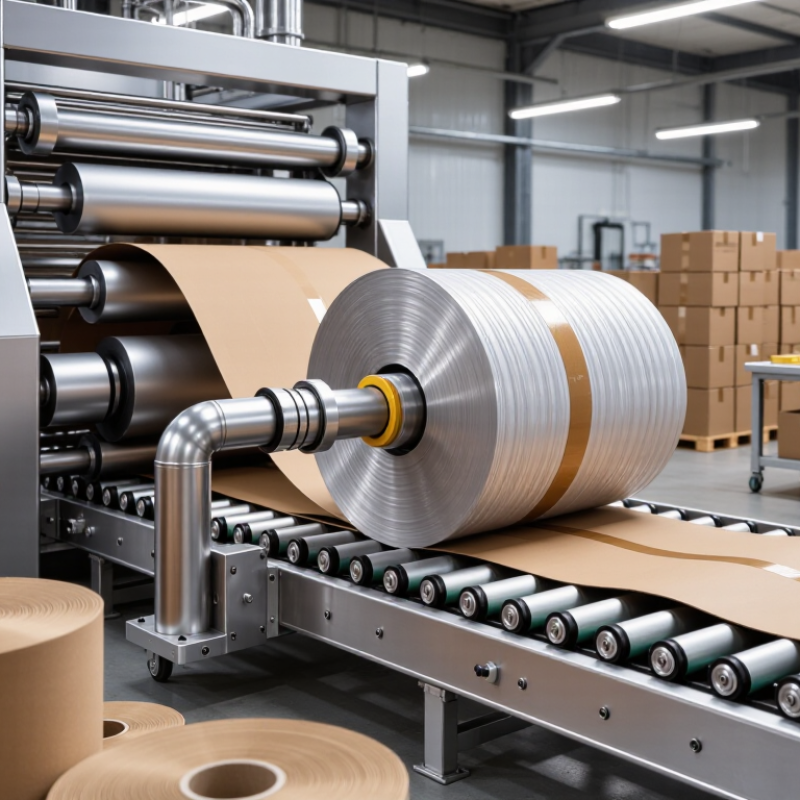
How to Choose the Right Corrugated Roll?
A corrugated roll is chosen by flute profile, board structure, and end use. A-flute offers thicker cushioning for fragile products. B-flute resists crushing and suits retail trays. C-flute balances stacking strength with protection. E- and F-flutes create smoother surfaces for detailed printing and folding. Double-wall rolls add strength when shipments face long transport or heavy loads.
Application matters more than appearance. A 2024 Smithers market report identifies e-commerce and transport protection as major growth drivers. FEFCO’s 2023 industry statistics recorded about 48 billion square metres of European corrugated board production. That scale shows why small specification errors can create large material waste. A roll for automated packing may need tighter caliper control, while a produce box may prioritize ventilation and compression strength. No profile is perfect.
Tips: Test the roll with the real product, not only a laboratory sample. Check flute height, pitch, moisture, and compression results. Ask for edge crush and burst data. A neat specification can still fail in humid storage. I still question choices based only on price; cheaper rolls may increase rejects, machine stops, and protective fillers. Verify performance after printing, die-cutting, stacking, and transport simulation.
Corrugating roll selection depends on flute geometry and the required balance between cushioning, stacking strength, printability, and material efficiency. A-flute generally provides higher cushioning and compression resistance, while B-, C-, E-, and F-flutes are progressively finer and are commonly selected for handling strength, general packaging, retail presentation, and lightweight protective packaging. Dimensions shown are typical industry ranges represented by midpoint values and may vary by machine standard and manufacturer.
Choosing a corrugated roll starts with the production line, not the roll catalog. Define the required flute profile, sheet width, board grade, and target output. Confirm the paper’s GSM, moisture range, liner type, and adhesive system. These details affect flute formation, bonding, and finished-board strength.
Speed changes everything. A roll designed for moderate output may struggle at higher line speeds. Check operating temperature, pressure, nip load, and allowable runout with the equipment technician. Small alignment errors can create uneven flute tips or crushed board.
Roll material and surface treatment also deserve careful review. Hardened steel may suit demanding production, while specialized coatings can reduce wear and simplify cleaning. Ask for hardness, surface roughness, dimensional tolerance, and balancing data. Match the roll diameter and bearing arrangement to the existing machine. Measure it twice.
In practice, operators should compare new specifications with actual shift records, including vibration, waste rate, glue consumption, and maintenance intervals. A common mistake is choosing a roll for maximum speed without checking paper behavior at that speed. I would not treat a catalog value as a guarantee. Trial data from your own line is more reliable. Record temperature changes, pressure adjustments, and board quality during testing. Even experienced teams may miss a variable when production conditions change. That gap deserves honest review before final approval.
How to Choose the Right Corrugated Roll?
A corrugated roll should match the board’s intended performance, not just its width. FEFCO technical specifications place common flute heights near 1.5 mm for E flute, 3 mm for B flute, and 4 mm for C flute. These dimensions affect compression, stacking strength, and print appearance. A wider roll may improve output, but only when the machine’s web control remains stable.
Flute profile matters under real production pressure. B flute usually supports better surface smoothness and handling strength. C flute offers greater cushioning and vertical compression. E flute can produce sharper graphics, especially for retail cartons. Smithers’ 2024 market report expects global corrugated packaging demand to exceed 200 billion dollars by 2028. That growth increases pressure to reduce waste while maintaining consistent roll quality. Small profile variation can become visible across long production runs.
Surface quality deserves close inspection. Use transmitted light to find pinholes, wrinkles, edge damage, or uneven winding. TAPPI T 555 testing measures paper roughness through Parker Print-Surf methods, helping compare liner surfaces more objectively. Lower roughness often supports cleaner printing, but it is not the only control point. Moisture, tension, and adhesive balance also influence final board quality. I would not trust a roll because it looks perfect at the warehouse entrance. Check the core, splice area, roll hardness, and sample sheets. Some defects appear only after converting. That is easy to miss.
| Evaluation Dimension | Specification or Profile | Typical Technical Data | Recommended Inspection Method | Selection Guidance |
|---|---|---|---|---|
| Roll Working Width | Usable width of the corrugating roll surface | 1,400–2,800 mm | Measure the effective face width with a calibrated steel rule or CMM. | Choose a working width equal to or slightly greater than the maximum sheet width. Avoid excessive unused width because it can increase setup time and uneven wear. |
| Roll Outside Diameter | Overall diameter of the corrugating roll | 250–500 mm typical | Measure across the roll using an outside micrometer at several axial positions. | Larger diameters generally improve rigidity and heat-transfer stability, while smaller diameters may suit compact machines and lower web tension. |
| Roll Face Runout | Radial variation during rotation | Preferably ≤0.03 mm TIR for precision applications | Check with a dial indicator while rotating the roll on its operating bearings. | Low runout helps maintain consistent nip pressure, flute height, glue application, and board caliper across the web. |
| Roll Surface Hardness | Hardness of the working surface after treatment | Approximately 50–65 HRC for hardened steel surfaces | Use a calibrated Rockwell hardness tester at multiple points outside critical profile areas. | Higher hardness improves wear resistance, but the final value must be compatible with the roll material, coating, grinding process, and maintenance plan. |
| Flute Profile | A-flute | About 4.5–5.0 mm flute height; approximately 8.0–9.5 mm pitch | Measure flute height and pitch from a cut sample using optical measurement or a profile projector. | Provides high cushioning and compression strength; commonly selected for protective packaging and heavier-duty cartons. |
| Flute Profile | C-flute | About 3.5–4.0 mm flute height; approximately 7.0–8.0 mm pitch | Verify the profile against the machine specification and measure several locations across the roll. | A widely used general-purpose profile offering a balance of stacking strength, cushioning, printability, and material consumption. |
| Flute Profile | B-flute | About 2.5–3.0 mm flute height; approximately 5.5–6.5 mm pitch | Inspect flute height, pitch, and symmetry using optical or contact profile measurement. | Suitable for better puncture resistance, improved print surface support, and cartons requiring relatively high stiffness with lower board thickness. |
| Flute Profile | E-flute | About 1.0–1.8 mm flute height; approximately 3.0–3.5 mm pitch | Use high-resolution optical inspection because the smaller profile is more sensitive to measurement error. | Recommended for thin, lightweight packaging and high-quality graphics where surface smoothness and compact board construction are important. |
| Flute Profile | F-flute | About 0.6–0.9 mm flute height; approximately 2.0–2.5 mm pitch | Inspect with an optical profile system and confirm the profile after production trials. | Best suited to micro-flute applications requiring a very smooth print face, low board thickness, and precise converting performance. |
| Flute Symmetry | Uniformity of flute peaks, valleys, and sidewalls | Profile deviation commonly targeted within ±0.05–0.10 mm, depending on flute size | Compare measurements at the center, drive side, and operator side of the roll. | Consistent flute geometry reduces crushing, caliper variation, uneven bonding, and sheet skew. |
| Surface Roughness | Working-surface finish of the roll | Typical polished areas may be approximately Ra 0.2–0.8 µm; follow the machine supplier’s specification | Measure with a calibrated surface roughness tester and record readings along and across the roll. | A controlled finish supports stable paper feeding and reduces marking. Excessive roughness can increase drag, while an overly smooth surface may reduce process stability in some applications. |
| Surface Defects | Scratches, pits, dents, corrosion, burrs, and coating damage | No visible defects in the active flute-forming or bearing surfaces | Clean the roll and inspect under uniform lighting at approximately 500–1,000 lux; use magnification for small defects. | Reject or repair defects that can mark the liner, alter flute geometry, create localized pressure points, or accelerate paper wear. |
| Thermal Uniformity | Temperature consistency across the roll face | A practical target is often within ±2–3°C across the working width after stabilization | Use a calibrated infrared camera or contact temperature sensors after the roll reaches operating conditions. | Uniform temperature supports consistent starch bonding, flute formation, moisture control, and production speed. |
| Bearing and Journal Fit | Condition and dimensional accuracy of journals, bearing seats, and keyways | Follow the equipment drawing; inspect for wear, scoring, looseness, and out-of-round conditions | Measure with micrometers, bore gauges, and runout checks before installation. | Correct fits reduce vibration and prevent premature bearing failure. Do not select a roll based only on face dimensions. |
| Balance Quality | Dynamic balance of the complete rotating roll assembly | Commonly specified as ISO 21940 grade G2.5 or G6.3, depending on speed and equipment requirements | Request a dynamic balancing report at the intended operating speed or an agreed reference speed. | Higher-speed lines normally require tighter balance control to minimize vibration, noise, web instability, and bearing load. |
| Paper and Board Compatibility | Compatibility with liner grammage, recycled content, moisture, and target board grade | Common liner ranges include approximately 80–250 g/m², subject to the production line | Run a controlled trial and evaluate caliper, bond strength, flute crush, warp, and print appearance. | Use deeper profiles for cushioning and compression strength; use finer profiles for print quality, lightweight structures, and tight converting tolerances. |
| Maintenance Interval | Inspection and regrinding schedule | Inspect routinely; schedule detailed checks based on operating hours, speed, paper abrasiveness, and measured wear | Track flute height, pitch, surface roughness, runout, temperature, and board quality over time. | Replace or recondition the roll when wear causes unstable flute geometry, increased waste, inconsistent bonding, or unacceptable board strength. |
A right corrugated roll is not simply the one with the highest hardness. In daily production, performance depends on flute geometry, surface finish, heat stability, and pressure control. A roll may produce sharp profiles at 180 meters per minute, then lose consistency when steam conditions change. Small deviations can appear as crushed flutes, weak bonding, or uneven board height.
Compatibility deserves equal attention. Match the roll with the machine’s working width, flute specification, bearing arrangement, and heating method. Confirm the adhesive gap and nip pressure under real operating conditions, not only in a technical datasheet. I once focused too heavily on wear resistance and overlooked the existing heating response. The roll lasted well, but startup waste increased. That was an expensive reminder.
Operating efficiency is measured beyond running speed. Consider warm-up time, energy demand, cleaning access, changeover duration, and maintenance intervals. A stable roll should hold profile accuracy across long runs and tolerate ordinary production variation. Request measurable evidence, including surface hardness, runout tolerance, expected service life, and test results with comparable paper grades. Keep records of pressure, steam temperature, line speed, and defect rates. Data reveals patterns that operators may miss. Still, no specification replaces a trial on your own corrugator. Paper behavior changes with humidity. So does judgment.
Price matters, but the lowest quotation can become expensive during production. Compare the complete operating cost, not only the purchase price. A roll with suitable flute geometry can reduce waste, vibration, and uneven board formation. Check its working width, diameter, surface finish, and expected running speed. These details affect performance every shift.
Service support is equally important. Ask about technical consultation, inspection records, repair options, and replacement lead times. A reliable supplier should explain how the roll suits your paper grades and machine settings. Clear service terms can prevent long interruptions when scoring marks or surface damage appears. Keep spare-part availability in the discussion. It is often overlooked.
Try to calculate cost per production hour. Include installation, maintenance, energy use, rejected sheets, and possible downtime. A cheaper roll may require more frequent adjustments. That is not always a bad choice for light-duty work, though. I would question any recommendation based only on machine speed. Paper moisture, operator skill, and maintenance habits also change results. Test data from your own line is more useful than a general promise. Small trials may expose problems before a large purchase.