Why Choose Recycled Cardboard for Sustainable Packaging Solutions?
In today's world, the shift towards sustainable packaging is vital. Recycled cardboard plays a crucial role in this transformation. Experts in the field emphasize its importance. For instance, Sarah Tilley, a sustainable packaging consultant, states, "Using recycled cardboard not only reduces waste but also supports responsible consumption."
Recycled cardboard has unique advantages. It is lightweight, versatile, and easily customizable. This material can be used for various packaging needs, from retail to shipping. Sustainable brands increasingly choose it to align with eco-friendly values. However, challenges still persist. Not all recycled cardboard meets quality standards, leading to variations in performance.
Consumers are becoming more discerning. They seek brands that prioritize sustainability. Recycled cardboard offers a solution, but it’s not perfect. Brands must continuously evaluate their sourcing practices. This ongoing reflection is essential to improve and maintain environmental integrity. As the market evolves, the demand for recycled cardboard will likely grow.

Benefits of Using Recycled Cardboard in Packaging Solutions
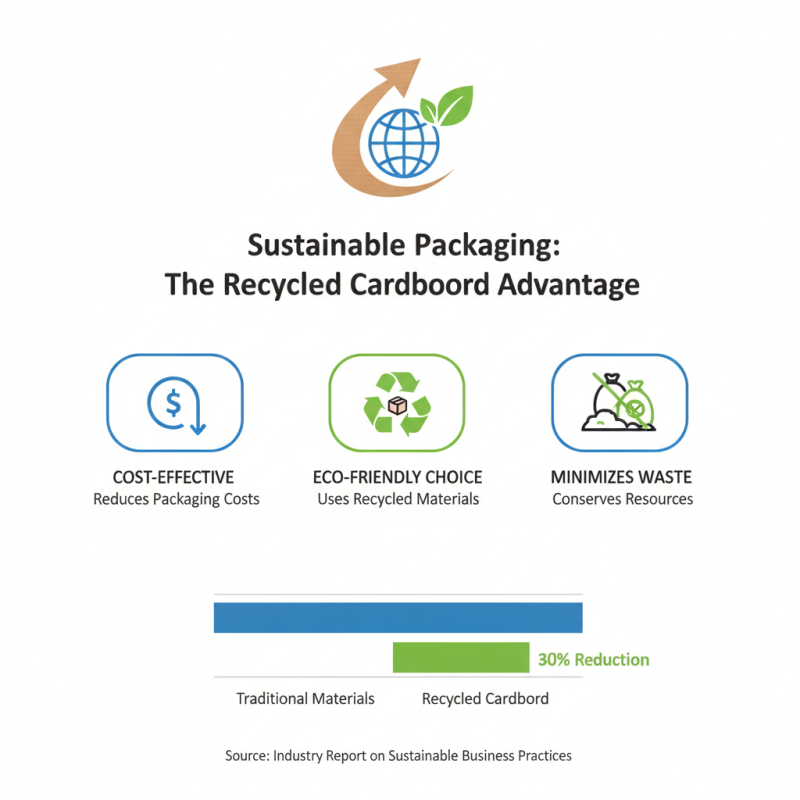
Recycled cardboard is gaining popularity for sustainable packaging. It offers significant benefits, especially in reducing waste. This material is made from post-consumer waste, minimizing the need for new resources. By choosing recycled cardboard, businesses lower their carbon footprint, contributing to a healthier planet.
One key tip is to evaluate your packaging needs. Consider the durability required for your products. Recycled cardboard can vary in strength. Use thicker cardboard for heavier items, ensuring they arrive safely. Incorporate creative designs to capture attention while remaining eco-friendly.
Another important aspect is how to source quality recycled materials. Not all suppliers offer the same standards. Spend time researching reliable vendors. Transparency in sourcing is crucial. Lastly, encourage customers to recycle the packaging after use. This creates a loop and enhances the sustainability efforts. It’s about making small changes that can lead to significant impacts.
Why Choose Recycled Cardboard for Sustainable Packaging Solutions? - Benefits of Using Recycled Cardboard in Packaging Solutions
| Benefit |
Description |
Impact on Sustainability |
Cost Efficiency |
| Reduced Waste |
Using recycled cardboard reduces the amount of waste sent to landfills. |
Promotes circular economy and lowers landfill usage. |
Lower disposal costs for businesses. |
| Energy Savings |
Recycling cardboard uses less energy compared to producing new cardboard. |
Reduces carbon footprint from production processes. |
Lower energy costs in the supply chain. |
| Versatility |
Recycled cardboard can be used in various packaging formats, including boxes and inserts. |
Facilitates diverse applications in sustainable packaging. |
Cost-effective for various product requirements. |
| Brand Image |
Brands using recycled materials can enhance their reputation and appeal to eco-conscious consumers. |
Strengthens brand loyalty among sustainable-minded customers. |
Potential increase in sales through positive brand perception. |
Environmental Impact of Recycled Cardboard on Waste Reduction
The environmental impact of recycled cardboard is significant. By using recycled materials, we reduce the amount of waste in landfills. Each ton of recycled cardboard can save about 17 trees. That translates to less deforestation and better air quality. However, the recycling process is not perfect. Contamination can impact the quality of recycled products, leading to loss of potential resources.
Moreover, transportation plays a crucial role in sustainability. Transporting recycled cardboard can consume energy, producing emissions. Closely managing this process is essential. Local recycling programs can minimize this impact effectively. Educating communities about proper recycling methods is vital. Many people still throw away recyclable cardboard, increasing waste. It’s a challenge that requires a collective effort.
In addition, the lifecycle of recycled cardboard presents its own hurdles. The production of new boxes from recycled materials often involves energy and water use. Balancing these factors is complex. It’s important to acknowledge that while recycled cardboard is better, it isn't the ultimate solution. Continuous innovation in recycling technology is needed. Understanding these imperfections allows for better choices.
Environmental Impact of Recycled Cardboard on Waste Reduction
Comparison: Recycled Cardboard vs. Virgin Materials in Sustainability
Recycled cardboard is gaining attention in sustainable packaging. When compared to virgin materials, it exhibits notable advantages. The production process for recycled cardboard saves energy and reduces carbon emissions. A significant amount of waste is diverted from landfills. This makes recycled cardboard an environmentally friendly choice.
Virgin materials, while strong, come with a hefty ecological cost. They often involve deforestation and habitat destruction. The extraction and processing also lead to significant pollution. Many consumers are still unaware of these hidden costs. More education on the impact of virgin materials is needed.
Using recycled materials can be a double-edged sword. Sometimes, it may not meet all strength requirements. Certain products may still require higher durability. However, ongoing improvements in recycling technology aim to bridge this gap. Small businesses might hesitate due to initial costs. Still, the long-term benefits for the planet are evident. Making the switch could inspire others in the industry.
Innovative Applications of Recycled Cardboard in Various Industries
Recycled cardboard has gained traction in various industries for its eco-friendly benefits. The packaging sector, in particular, is embracing this material due to its versatility. In 2022, the global green packaging market size was estimated at USD 415 billion. This figure highlights a growing trend toward sustainability. Companies are rapidly adopting recycled cardboard to minimize their carbon footprint.
In the food and beverage industry, recycled cardboard has proven invaluable. It is utilized for takeout containers and packaging materials. Studies indicate that using recycled materials can reduce energy consumption by up to 50%. This is significant, considering the urgency for sustainable practices. Yet, challenges remain. Not all recycled cardboard meets food safety standards, which raises questions about reliability.
The cosmetics industry also explores innovative uses of recycled cardboard. Custom packaging solutions are increasingly sought after. A report shows that 70% of consumers prefer brands that adopt sustainable practices. However, the effectiveness of recycled packaging can vary. Packaging may not always maintain the necessary aesthetic appeal for upscale products. This requires ongoing experimentation and investment in design. So, while recycled cardboard shows promise, its application needs careful consideration.