Inquiry
Form loading...

How to Choose Green Packaging for Your Business?

Choosing packaging is not only a design decision. It affects product protection, shipping costs, customer experience, and the waste left after delivery. Green Packaging can help a business reduce its environmental footprint, but the label alone does not prove that a package is a better choice. A paper mailer may use less plastic, yet it can fail in wet conditions. A compostable pouch may sound ideal, but local facilities might not accept it. Small details matter.

Start with the product and its journey. A glass jar needs cushioning; a lightweight T-shirt may need only a simple mailer. Compare options by material use, recycled content, durability, and what happens after use. Ask suppliers for clear specifications and evidence behind environmental claims. Check whether local recycling or composting services actually handle the material. Test samples with real products, including during storage and shipping. A package that breaks can waste both the product and the resources used to make it.

There is no perfect choice. Some trade-offs are easy to miss, and a package that works for one business may not suit another. This guide explores practical ways to weigh protection, cost, customer needs, and end-of-life options. The aim is not to chase a greener-sounding label, but to make a measured choice your business can explain and improve over time.

How to Choose Green Packaging for Your Business?

Identify Your Product, Shipping, and Packaging Requirements

Choosing green packaging starts with the product, not the material label. Note its weight, shape, fragility, and sensitivity to moisture or light. A glass jar needs different protection from a folded cotton shirt. Measure the item, including caps, handles, or other parts that may shift. Then decide what the package must do: protect, present, or both. A smaller box can reduce excess material, but only if the product still arrives intact.

Shipping conditions matter just as much. Estimate the parcel’s journey, stacking pressure, and exposure to rain or temperature changes. Test a realistic packed order by gently shaking it and checking whether the item moves. For fragile products, try a short drop test on a padded surface. Recycled paper or molded fiber may work well, yet neither is automatically right for every route. I have seen tidy-looking packages fail because a loose corner let the product slide. That detail is easy to miss.

Tips: Start with one product and one shipping route. Record package size, material weight, and damage after delivery. Ask a few customers whether opening and disposal feel clear. Adjust based on evidence, not appearance alone. Some compromises may remain. Be honest about them.

How to Choose Green Packaging for Your Business?

Identify Your Product, Shipping, and Packaging Requirements

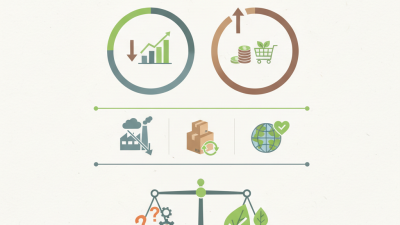
Example planning scores for a hypothetical product, rated from 1 (low priority) to 5 (high priority). Start with your product’s fragility and dimensions, then consider shipping protection, package size, material recovery options, and cost. These scores are illustrative—not industry averages—so adjust them to match your product and shipping data.

Compare Sustainable Packaging Materials and Their Trade-Offs

Choosing green packaging means comparing materials under real shipping conditions, not just reading a recycling symbol. The OECD’s Global Plastics Outlook (2022) estimates that only 9% of global plastic waste was ultimately recycled in 2019. Paper performs better in many collection systems: the US EPA reported a 68.2% recycling rate for paper and paperboard in 2018. Those figures describe different material streams, so they are not a direct head-to-head test. Still, they show why local recovery infrastructure matters.

Recycled cardboard is light, printable, and widely collected, but it can lose strength when wet. Molded fiber protects fragile items without plastic foam, yet its bulk may increase shipping volume. Recycled content helps, but food residue, coatings, and mixed materials can complicate sorting. That matters. Ask a local recycler what it actually accepts, then test the package after a damp delivery or a drop from a loading dock.

Glass and metal offer strong barriers and can be recycled repeatedly where collection exists. Their weight, however, raises transport impacts; reusable glass also needs enough trips to justify washing and return shipping. Not automatically better. Compare options using the same functional unit, such as packaging needed to deliver 1,000 undamaged products. Track material weight, damage rates, and end-of-life access. The uncomfortable part: data may be incomplete, and the lightest package is not always the one that prevents the most waste.

Evaluate Recyclability, Reuse, and End-of-Life Options

Choosing green packaging starts with its real journey after use. A material is not meaningfully recyclable if nearby sorting facilities reject it, or mixed layers make separation impractical. The OECD’s Global Plastics Outlook (2022) estimated that only 9% of global plastic waste was recycled in 2019. That is a useful reality check: a recycling symbol alone cannot prove local recovery. Ask your waste hauler what it accepts, then test the package with actual products, labels, seals, and food residue.

Reuse works when containers survive repeated trips and returns are convenient. Map the loop. Who collects the packaging? Where is it washed? How many uses are needed to offset its production? Heavy glass may last, but transport distance and breakage matter. Compare impacts per use, not per container. I still find return rates easy to overestimate. For end-of-life choices, check whether local facilities accept each component; “compostable” packaging may require industrial composting, not a backyard pile.

Tips: Request written acceptance guidance from local recyclers. Keep components in one material family where practical. For compostable packs, confirm that an appropriate facility serves your customers. It is not automatic. Run a small trial and track returns, damage, and disposal outcomes before scaling. If no verified recovery route exists, be candid about the likely disposal path.

Check Supplier Standards, Certifications, and Claims

How to Choose Green Packaging for Your Business?

Check Supplier Standards, Certifications, and Claims

Choosing greener packaging starts with checking the supplier, not just the material. Ask for current certificates, test reports, and a clear breakdown of what each package contains. Verify that documents cover the exact product and manufacturing site you plan to use. A certificate for one facility may not cover another. That sounds simple. It isn’t.

The OECD’s 2022 Global Plastics Outlook reports that packaging generated about 40% of global plastic waste in 2019. The report also estimates that only 9% of plastic waste was recycled that year. These figures make supplier claims worth checking closely. For recycled-content claims, request traceable records and the calculation method. For “compostable” packaging, ask which conditions it needs and whether local collection systems accept it. A label alone is not proof of practical disposal. Compare environmental claims using the same boundary, such as packaging weight per shipped item, rather than relying on broad phrases like “eco-friendly.”

Tips: Check certificate validity, scope, and audit date. Ask for evidence behind each claim, and keep the replies with your purchasing records. If a supplier cannot explain a claim clearly, pause and ask again.

Test Packaging Performance, Cost, and Customer Fit

Choose packaging for the journey, not just its green label. Pack a typical order, including the product, inserts, and shipping box. Run drop, compression, and moisture tests that match real handling conditions. Check for scuffs, leaks, crushed corners, and extra void fill. A material that fails can create damage, replacements, and more waste. There is no perfect swap.

Track the full cost per delivered order: material, packing time, freight space, and damage claims. A lighter pack may reduce shipping costs, but awkward folding can slow a busy packing bench. I still find labor easy to overlook. The OECD’s 2022 Global Plastics Outlook identifies packaging as roughly 40% of plastic waste generated, making material choices worth examining closely. But customer fit matters too. The 2023 Global Buying Green Report found that 82% of surveyed consumers said they would pay more for sustainable packaging; stated intent is not the same as a purchase. Pilot two options with a small customer group. Ask whether the pack is easy to open, protects the item, and fits household disposal habits. Test claims carefully: “compostable” packaging may not suit customers without access to appropriate composting.

How to Choose Green Packaging for Your Business? - Test Packaging Performance, Cost, and Customer Fit

Compare these common packaging formats as a starting point. Cost ranges are indicative U.S. dollar estimates per unit for medium-to-high order volumes; actual prices vary by size, quantity, supplier, and region.

Packaging option Typical applications Protection and performance Material and recovery considerations Indicative unit cost (USD) Customer fit What to test before choosing
Recycled-content corrugated box E-commerce orders, heavier goods, and products needing a rigid outer shipper. Good stacking and impact protection when box size, board grade, and internal cushioning suit the product. Can be oversized or damaged by moisture. Widely recyclable where paper-and-cardboard collection is available. Recycled content and recyclability depend on board specifications and local facilities; remove non-paper components where practical. $0.40–$1.50 A practical choice for customers who need reliable delivery protection and have access to paper recycling. Run packed-product drop, compression, and vibration tests. Check damage rates, box fit, void fill, and dimensional shipping charges.
Paper padded mailer Flat, lightweight, non-fragile items such as apparel, documents, and soft goods. Offers basic puncture resistance and cushioning. Usually provides less crush and moisture protection than a box and may not suit fragile products. Often designed for paper recycling, but plastic bubble linings, coatings, or mixed materials can affect acceptance. Follow local recycling guidance. $0.15–$0.60 Suitable for customers who value a lightweight, compact delivery and can recycle the mailer locally. Test seams, closure strength, puncture resistance, and moisture exposure using the actual product and shipping route.
Molded-fiber insert with a paperboard or corrugated box Products needing a fitted cradle, such as small appliances, glass containers, and electronics. Can hold a product in position and absorb some impact. Protection depends on insert design, product weight, and clearance inside the outer box. Typically made from molded paper fiber and commonly intended for paper recycling where accepted. Confirm coatings, additives, and local collection rules. $0.20–$0.80 for the insert, plus the outer box Works well when customers want a paper-based protective presentation and the product needs a custom fit. Test drops and vibration with the final insert and box. Check fit consistency, breakage, assembly time, and storage space.
Reusable polypropylene (PP) tote or returnable container Closed-loop business-to-business deliveries, local distribution, or routes with an established return system. Durable and suitable for repeated handling when correctly designed. Overall performance depends on cleaning, loss rates, return logistics, and the number of completed reuse cycles. Reusable, but not automatically lower-impact in every system. End-of-life recycling depends on local facilities and the container’s material and design. $3.00–$10.00 Best for customers and delivery partners able to return containers reliably; less suitable for one-way shipments. Pilot return rates, loss and damage, cleaning needs, transport distance, and reuse cycles. Compare total cost per successful delivery with single-use packaging.
Certified compostable mailer Lightweight, non-fragile shipments where a suitable composting collection service is available to customers. Provides basic mailing protection, but may be less resistant to punctures or moisture than some plastic mailers. Confirm shelf life and storage requirements with the supplier. Compostability depends on certification, product conditions, and access to an accepting industrial or home composting system. It is generally not suitable for paper recycling or ordinary compost unless local guidance says otherwise. $0.20–$0.80 A fit only when customers can identify and use the intended composting route; clear disposal instructions are important. Verify the applicable certification and local collection access. Test seal strength, puncture resistance, storage stability, and customer disposal understanding.

Selection tip: compare total delivered cost, including product damage, labor, shipping volume, returns, and disposal—not just the packaging unit price. Validate shortlisted options with shipment trials and check local end-of-life guidance before making environmental claims.