
Inquiry
Form loading...
Choosing the best China Retail Packaging supplier requires more than comparing unit prices. It means examining materials, production controls, communication, and delivery evidence. A glossy sample may look impressive under showroom lights, yet fail after weeks in humid warehouses. Supplier selection must connect design with real retail conditions.
The Smithers report, The Future of Global Packaging to 2028, forecasts the worldwide packaging market will approach 1.2 trillion US dollars by 2028. That growth increases opportunity, but also increases supplier risk. McKinsey’s 2023 sustainability research found that 60% to 70% of consumers may pay more for sustainable packaging. Retail buyers now expect recyclable structures, lighter materials, clear sourcing, and credible environmental claims. These expectations are not always easy to verify.
Lisa McTigue Pierce, a packaging industry specialist and former Packaging Digest executive editor, has described packaging as “a brand’s handshake with the consumer.” That image matters. The carton is touched, opened, photographed, and judged before the product is fully understood. In this guide, we compare China suppliers through practical criteria, including factory experience, material consistency, printing accuracy, certifications, minimum order quantities, sampling, and after-sales support. Cost still matters. It should not lead alone. A low quotation can hide tooling charges, weak inspections, or expensive shipping delays. No supplier is perfect, and even established factories require careful validation. The strongest choice is usually the supplier that documents its process clearly and solves problems before production begins.
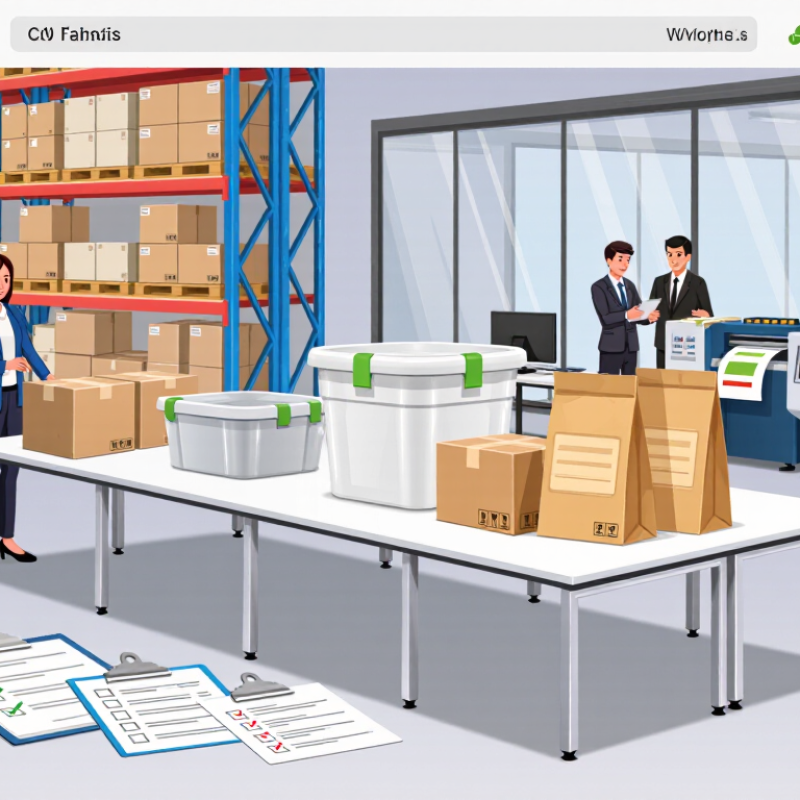
A leading China retail packaging supplier is defined by more than low pricing. It combines material knowledge, stable production, and clear communication. Smithers’ The Future of Global Packaging to 2028 estimates the global packaging market will reach about US$1.42 trillion by 2028. That growth increases pressure on suppliers to deliver consistent quality at scale. Buyers should inspect factory records, production capacity, sampling procedures, and quality-control checkpoints. A reliable supplier can explain board thickness, ink performance, compression strength, and carton tolerance in practical terms.
Traceability is equally important. Each order should connect to approved materials, production dates, inspection results, and shipping records. ISO 9001-based quality systems can support this process, but certification alone proves little. Buyers should request recent audit evidence and independent test reports. Packaging should also meet the destination market’s safety and recycling requirements. The Ellen MacArthur Foundation’s Global Commitment reports that packaging waste remains a major concern, making material reduction and recyclability meaningful supplier capabilities.
Experience appears in small details. Samples should arrive with accurate colors, clean folds, firm edges, and protective inner packing. A strong supplier also flags design weaknesses before mass production. Still, no supplier is flawless. Delays happen. Miscommunication happens. The better partner reports problems early, proposes measurable corrections, and records the lesson. One practical test is simple: ask for a pilot order, then compare delivered cartons against the approved sample. Confidence should be earned, not assumed.
| Evaluation Dimension | Practical Benchmark | Why It Matters for Retail Packaging | Recommended Evidence | Suggested Weight |
|---|---|---|---|---|
| Material and Structural Expertise | Capability to produce folding cartons, rigid boxes, corrugated packaging, paper bags, labels, and protective inserts according to the project specification. | Different retail products require different levels of protection, presentation quality, stacking strength, and unboxing performance. | Material specification sheets, structural drawings, sample library, and completed project references without confidential brand information. | 15% |
| Print and Finishing Quality | Controlled color matching, accurate die-cutting, clean folding and gluing, consistent surface finishing, and inspection against approved samples. | Retail packaging is highly visible and must maintain consistent appearance across production batches. | Pre-production proof, color approval process, inspection records, defect classification, and retained production samples. | 15% |
| Quality Management | Documented incoming-material checks, in-process controls, final inspection, corrective-action procedures, and traceable production records. | A formal quality system reduces repeat defects, shipment disputes, and inconsistent packaging dimensions. | Quality manual, inspection plan, sampling method, calibration records, and third-party quality-management certification where applicable. | 15% |
| Production Capacity and Scalability | Capacity planning that supports sampling, pilot runs, repeat orders, seasonal peaks, and multi-size packaging programs. | Retail demand can change quickly, and insufficient capacity may cause stockouts or delayed launches. | Production-line overview, capacity statement, staffing plan, maintenance records, and peak-season contingency plan. | 10% |
| Lead-Time Reliability | A clearly defined schedule covering artwork approval, sampling, production, inspection, packing, and shipment, with documented on-time delivery performance. | Packaging delays can postpone product launches, replenishment, and retail promotions. | Order timeline, production milestones, historical delivery records, escalation process, and written delay-notification policy. | 10% |
| Minimum Order Quantity and Flexibility | Clear minimum-order rules, options for pilot quantities, repeat production, mixed sizes, and reasonable changeover planning. | Flexible order terms help retailers test new products and reduce excess packaging inventory. | Written quotation, quantity-break table, setup-charge policy, production-changeover terms, and sample-order conditions. | 8% |
| Sustainability and Material Traceability | Ability to provide recycled-content information, responsible-fiber documentation, material declarations, and recycling or compostability claims supported by applicable standards. | Retailers increasingly require verifiable environmental claims and transparent packaging materials. | Chain-of-custody documents, recycled-content records, supplier declarations, laboratory reports, and claim-substantiation files. | 10% |
| Regulatory and Product Safety Support | Documented control of inks, coatings, adhesives, substrates, and packaging components relevant to the intended market and product category. | Packaging may need to meet food-contact, chemical, labeling, recyclability, or product-safety requirements. | Material safety data, conformity declarations, migration or chemical test reports where required, and regulatory review records. | 10% |
| Communication and Technical Support | Responsive communication, clear technical English, assigned project ownership, and support with dielines, tolerances, artwork, and packaging optimization. | Fast and accurate communication prevents specification errors and shortens approval cycles. | Response-time expectations, technical drawing review, sample-approval workflow, meeting records, and issue-resolution history. | 4% |
| Export, Packing, and Logistics Capability | Export-ready documentation, suitable carton and pallet configuration, moisture and transit protection, and coordination with the buyer’s nominated forwarder. | Correct logistics preparation reduces transit damage, customs delays, and warehouse handling problems. | Packing specification, carton-marking example, pallet plan, shipping documents, export experience, and damage-prevention procedure. | 3% |
| Total Evaluation Weight | 100% | |||
Note: Benchmarks should be verified against the specific packaging material, target market, product category, order quantity, and delivery requirements.