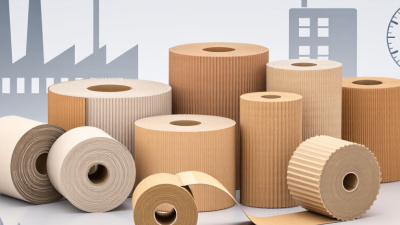
Choosing the right Corrugated Cardboard Roll starts with the job it needs to do. A roll used to wrap ceramic mugs has different demands from one used to separate flat panels or cushion small appliance parts. Product weight, sharp edges, shipping distance, and storage conditions all matter. So does the way the material will be cut and handled.
Width is a practical starting point: too narrow, and workers may need extra overlaps; too wide, and material can be wasted. Check the board’s flute profile and thickness, then consider how much cushioning or stiffness your items actually need. A thicker roll is not automatically the better choice. The right option should protect the product without making packing awkward or adding unnecessary bulk. Small details matter.
For transparency, the quotation below is an original illustrative line from a fictional packaging specialist, not a verified industry quotation: “Choose the roll for the product’s weak points, not just its dimensions.” In real purchasing, confirm the roll’s stated specifications with the supplier and test it using your actual products. A short packing trial can reveal problems that a product sheet will not, such as difficult unwinding or loose coverage around corners. I would not rely on a single test, either; packing conditions and product shapes vary. This guide explores the key factors behind a dependable choice, including protection needs, roll dimensions, material handling, and value. The goal is a roll that fits your workflow as well as your package.

Choosing a corrugated cardboard roll starts with the product, not the roll. Note the item’s weight, shape, and surfaces before wrapping. A heavy ceramic bowl needs cushioning around its rim and base; a light book may need only a protective outer layer. Corrugated wrap can reduce scratches and minor impacts, but it cannot replace a sturdy box for a heavy or fragile item. Start with the item.
Fragility changes how much material to use. For glassware, wrap each piece separately and check that it cannot knock against nearby items. For products with sharp corners, overlap the corrugated layers so edges do not press through. A quick shake test can reveal loose packing, though it is not a substitute for testing under real shipping conditions. Test before scaling.
Transit conditions matter, too. Long routes, repeated handling, and tight stacking can increase pressure on a package, so choose a roll with enough cushioning and pair it with a suitable carton. Moisture is another concern: ordinary corrugated material can soften when wet. If parcels may face rain or damp storage, add a moisture-resistant outer barrier and keep packages off wet floors. It is easy to assume thicker wrap solves every problem; it doesn’t. Check the full packed parcel, especially its corners and seams, before shipping.

Flute size affects how a corrugated roll cushions, folds, and fits around a product. E-flute is about 1.5 mm thick, making it a neat choice for small parcels, close wrapping, and lighter items. It takes up less space and forms crisp corners. The trade-off is less cushioning when a package faces rough handling. A slim wrap is not always a safe wrap.
B-flute, around 3 mm, offers a practical middle ground. It adds more cushioning and stiffness without becoming especially bulky, so it suits many everyday packing jobs. C-flute, at roughly 4 mm, has deeper flutes that can help protect heavier or more fragile goods. It also needs more room and may create less tidy folds around tight corners. Thicker is not automatically better.
Try wrapping a sample item with each suitable flute size. Check whether the roll bends cleanly, stays in place, and protects exposed edges. Then test the packed item in conditions close to its actual journey. A quick squeeze test can help, but it cannot reproduce every bump in transit. Paper weight, box design, and wrapping technique also matter, so flute size alone can give an incomplete answer.
Compare paper grades by grammage, measured in grams per square metre (g/m²), but do not treat weight as a strength rating. A heavier paper may resist handling better, yet fibre quality, recycled content, moisture, and manufacturing consistency also matter. Ask whether the stated grammage applies to the liner, the fluting, or the complete roll. Those figures are not interchangeable.
Check test results alongside the grade. Tensile strength indicates resistance to pulling, while burst tests show how well paper withstands pressure. Ring crush or short-span compression results can help assess resistance to crushing. For a finished corrugated board, edge crush testing is more directly relevant than paper grammage alone. Compare results only when test methods and sample conditioning match; damp paper can perform differently from paper stored in a dry warehouse.
Look for numbers, not vague terms such as “heavy duty.” Request the test method, sample date, and acceptable tolerance, then compare rolls of similar width and construction. A small sample can reveal loose winding, uneven flutes, or paper that tears during feeding. One limitation: supplier data may not reflect your packing line’s speed or humidity. Test the roll in real conditions, and record any awkward handling. It is easy to overlook.
Choosing a corrugated cardboard roll starts with the products you pack, not the storage shelf. Measure the widest face and the height of several typical items. Roll width should cover the exposed surface and leave enough material to fold over the edges. Test one carton. A narrow roll may leave corners exposed, while an overly wide roll can create waste and awkward handling.
Estimate roll length from the number of packages and the amount used per wrap. Include overlap and extra material for securing edges, but don’t rely only on a perfect, tightly measured sample. Real packing varies. A calculated estimate can still miss the mark when products have uneven shapes or workers use different wrapping methods. Track consumption during a normal packing shift before ordering a large quantity.
Check core diameter against the dispenser spindle; the core’s inside opening must fit securely. Also measure the roll’s outside diameter when full, since it needs to clear the dispenser frame and fit your storage space. If the roll will be handled by hand, consider its weight as well. A short test run can reveal fit problems, though it may not reflect every shift’s pace.
Match roll width, length and core diameter to the items you pack and your dispenser. The chart shows illustrative starting-point combinations, not universal specifications; confirm fit and required coverage before ordering.
Each bubble represents an example packaging requirement. Horizontal position shows roll width (mm), vertical position shows roll length (m), and bubble size indicates core diameter (mm). Choose a width that covers the item, enough length for expected use, and a core that fits your dispenser.
When choosing a corrugated cardboard roll, ask for samples from the material you expect to buy. Test edge crush resistance using ISO 3037, which measures how well corrugated board resists compression when loaded on its edge. Keep the flute direction and sample preparation consistent; otherwise, results may not be comparable. Small details matter. Condition samples in a controlled environment before testing, and record the temperature and humidity. A single strip is not enough to represent a full roll, so test several pieces from different areas when possible.
Check water absorption with the Cobb method in ISO 535. It measures how much water a paper or board surface absorbs over a set period. Compare results using the same test duration and the same board side, since liners may behave differently. A lower absorption value can be useful in damp conditions, but it does not guarantee that a finished package will stay strong when wet. A sample can still mislead. Storage, converting, and actual exposure all affect performance. I would use both test results alongside the roll’s intended use, rather than choosing by one number alone. If results vary noticeably between samples, ask for another batch and investigate before placing a large order.
Compare sample constructions using edgewise crush resistance and Cobb water absorption. Higher edge crush values indicate greater resistance to edgewise compression; lower Cobb values indicate less water absorption.
| Sample | Board construction | Basis weight (g/m²) |
Edge crush (ISO 3037, kN/m) |
Cobb60 (ISO 535, g/m²) |
Potential application | Selection note |
|---|---|---|---|---|---|---|
| A | Single-wall, B-flute; standard kraft liners and recycled fluting | 410 | 4.2 | 42 | Lightweight retail and general-purpose packaging | Lower crush resistance and moderate water absorption; consider for dry, lighter loads. |
| B | Single-wall, C-flute; kraft liners and recycled fluting | 450 | 5.1 | 38 | General shipping cartons and routine warehouse handling | A balanced example for everyday applications where moderate stacking strength is needed. |
| C | Single-wall, B-flute; heavier liners and recycled fluting | 510 | 6.0 | 35 | Heavier products and packages requiring improved stacking performance | Higher example crush resistance with lower water absorption than Samples A and B. |
| D | Double-wall, BC-flute; kraft liners and recycled fluting | 720 | 8.4 | 40 | Heavy-duty shipping and higher stacking loads | Highest example crush resistance; the exposed liner’s absorption result should be checked against the intended environment. |
| E | Single-wall, C-flute; moisture-resistant liner and treated fluting | 470 | 5.0 | 24 | Packaging with occasional exposure to humid conditions or splashes | Lower example Cobb value suggests reduced water uptake in the tested surface; it does not make the board waterproof. |
Testing and interpretation: Values above are illustrative screening examples, not certified measurements or guaranteed product specifications. Test actual converted corrugated-board samples under controlled conditioning. ISO 3037 measures edgewise crush resistance of corrugated fibreboard; ISO 535 determines water absorptiveness using the Cobb method. Cobb60 denotes a 60-second test, and the tested face should be recorded. Acceptance limits depend on the package design, load, storage conditions, and customer requirements.